
BREAKING: MORE CBA DRAMA
Since the 30-day extension was announced, it’s been nothing but back-and-forth shots between the WNBPA and the WNBA, with fans watching like kids stuck in the middle of a divorce. The extension is set to end on January 9, which would leave enough time for the Toronto and Portland expansion draft and for free agency. But by all accounts, there’s been little to no real progress in negotiations, and I’m genuinely starting to think we might not get a full season this year.
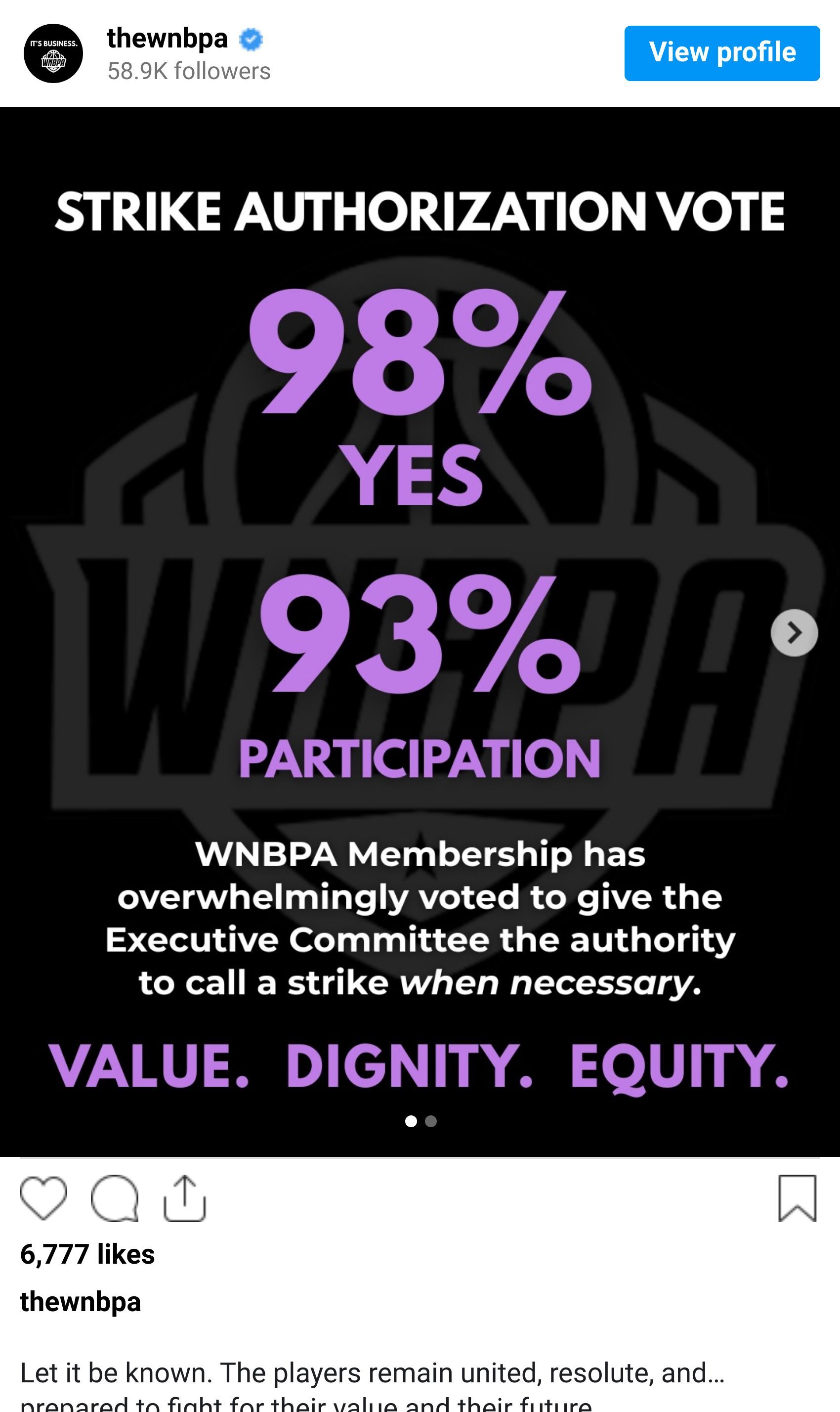
Earlier this month, the WNBPA announced that players authorized the executive committee to call a strike if necessary. The vote passed with 98% approval and 93% player participation. This does not mean a strike is imminent, but it sends a clear message to the league about the depth of player unity.
NEW YORK, NY, Thursday, December 18, 2025 —
“The players have spoken. Through a decisive vote with historic participation, our membership has authorized the WNBPA’s Executive Committee to call a strike when necessary. The players’ decision is an unavoidable response to the state of negotiations with the WNBA and its teams.
Time and again, the players’ thoughtful and reasonable approach has been met by the WNBA and its teams with a resistance to change and a recommitment to the draconian provisions that have unfairly restricted players for nearly three decades. The players’ vote is neither a call for an immediate strike nor an intention to pursue one. Rather, it is an emphatic affirmation of the players’ confidence in their leadership and their unwavering solidarity against ongoing efforts to divide, conquer, and undervalue them.
Let it be known. The players remain united, resolute, and prepared to fight for their value and their future.”
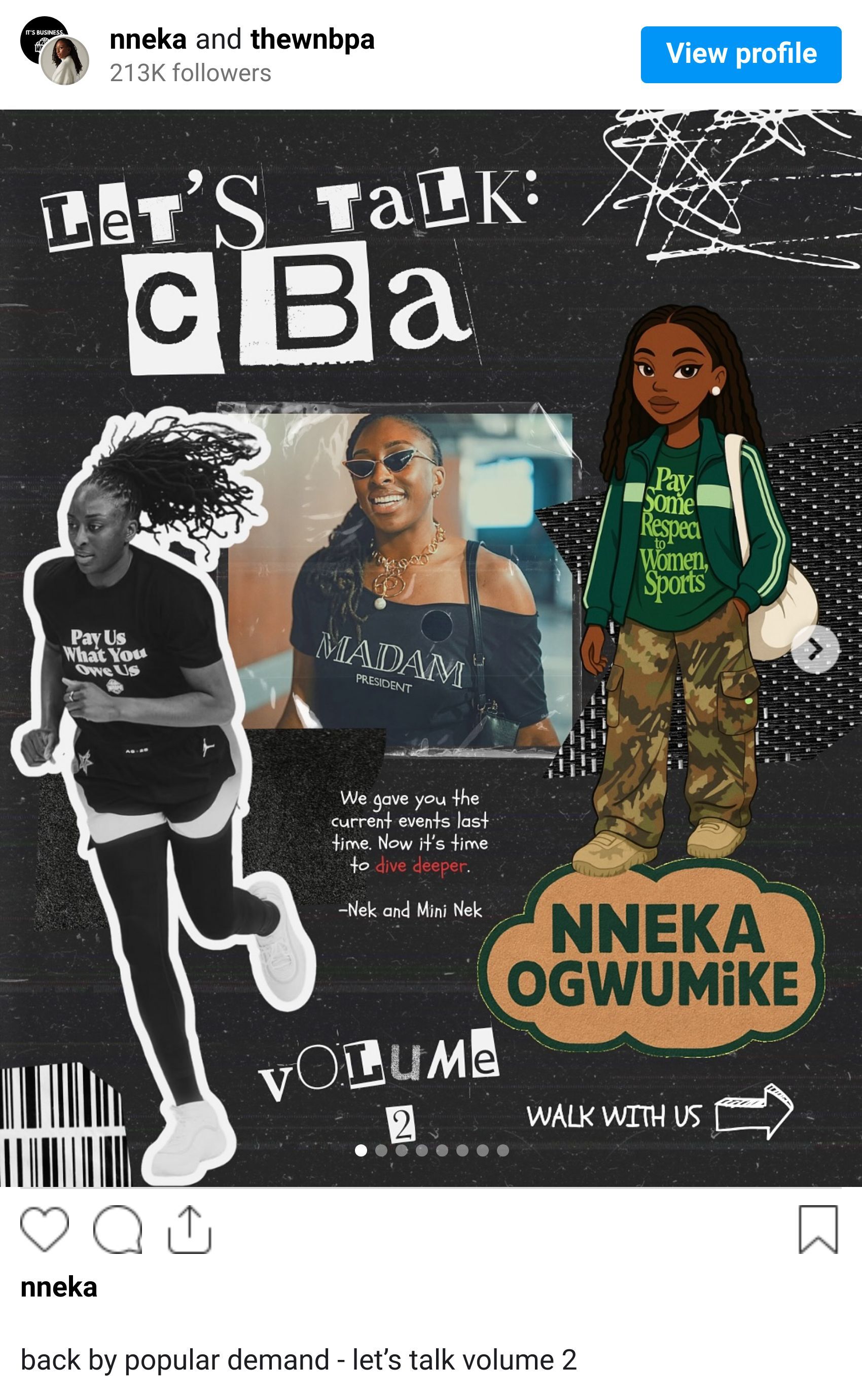
The common sentiment vocalized by players, most notably WNBA Executive Committee members Stewie, Kelsey Plum, and Phee, is that they believe they have gone out of their way to be flexible and show a willingness to compromise. They believe this gesture hasn’t been met with the same courtesy by the league. The main sticking point remains the WNBA’s proposed revenue-sharing model. That ongoing imbalance has pushed players to deliver a strong, unified message of solidarity.
“We have been very adamant from the jump, very specific about what we are going for, and that’s revenue share,” two-time WNBA champion Kelsey Plum told FOS. “Meaningful revenue from all aspects of the business. That’s not just the league, that’s the team revenue, too. There’s a level of frustration because we’ve started with this, and we can’t move forward until we get that and get to a level where we feel comfortable.”
WNBA’s Response and Proposals

WNBA Suggested CBA Changes since December 5th
Revenue Sharing:
Proposed Change: Players receive 50% of the net league and team revenue; however, not all revenue streams are included, and expenses are deducted accordingly. After exclusions and expense deductions, players’ actual share amounts to roughly 15%
Current Situation: Players receive 9% of total league revenue.
Implications: This is the main issue blocking any real progress. The players have been clear that they will not sign a CBA without a fair revenue-sharing system. The WNBPA proposal sits at 30% of gross revenue, a figure the WNBA has outright rejected.
Courtney Williams breaks down a key issue in the video below: The WNBA wants to cover all expenses before paying players. What’s especially notable is that, unlike the NBA, WNBA players are not classified as expenses. That accounting choice allows the league to justify giving players a smaller share of revenue after they’ve paid expenses.
This is one of the reasons that coaches can earn millions, such as Becky Hammon and Nate Tibbetts, while players remain capped. Liz Cambage was widely criticized when she asked, “How do coaches get paid millions before the players?” At the time, it was controversial. In hindsight, she was right as hell. ik rare for Liz.
Player Compensation
Proposed Change: An uncapped revenue-sharing model that would significantly increase player salaries:
Maximum salary: Above $1.3 million (up from $249,244 in 2025), growing to nearly $2 million over the life of the agreement
Average salary: Above $530,000 (up from $120,000 in 2025), growing to more than $770,000 over the life of the agreement
Minimum salary: Exceeding $250,000 in the first year alone (up from $66,079 in 2025)
Current Situation: Player salaries in 2025 are capped at:
$249,244 maximum
$120,000 average
$66,079 minimum
Implication: While the proposed salary increases are substantial, players remain dissatisfied with the underlying revenue-sharing structure.
The players’ union has proposed receiving approximately 30% of gross revenue.
The league has countered with a model granting players over 50% of net revenue, which equates to less than 15% of gross revenue.
Players argue that a net-based model obscures true league earnings and perpetuates systemic undervaluation.
The league maintains that it must balance meaningful pay increases with long-term financial sustainability, citing high operating costs and comparatively smaller total revenues than other major professional sports leagues
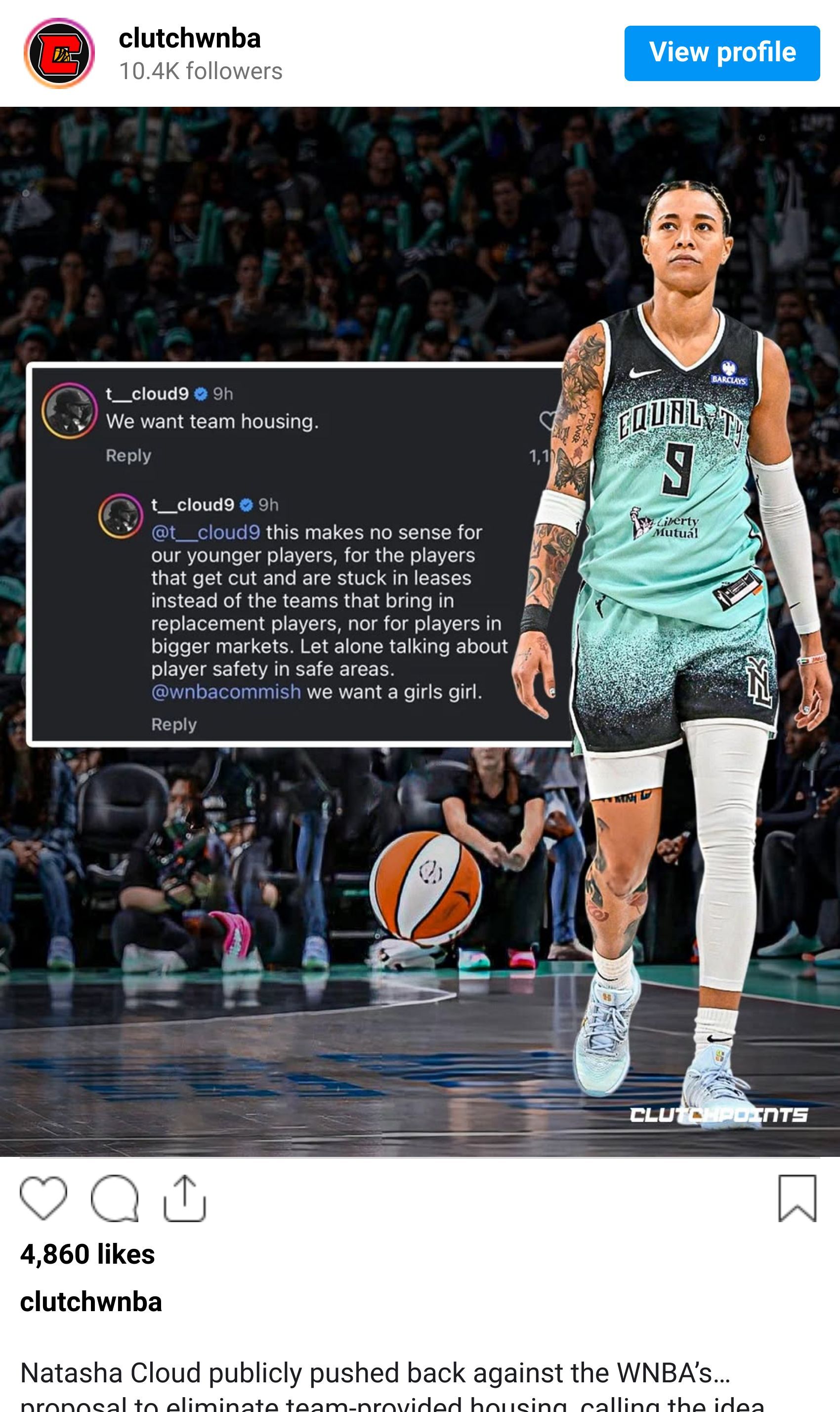
Elimination of Team-Provided Housing:
Proposed Change: Teams would no longer provide housing or housing stipends. The league feels that the increase in salary would place an increased burden on teams, so they should no longer have to foot the bill for housing expenses.
Current Situation: Teams currently offer housing and/or a housing stipend to players. Stipends vary by city, with NYC, LA, and DC leading the pack (as of 2024).
Implications
Disproportionately impacts:
Rookies and low-paid players
Hardship and temporary contract players
Players in high-cost markets
Increases financial instability for players with the least earning power.
On the other hand, this means teams that would now have to spend more on player salaries and revenue sharing could offset those costs by shifting housing expenses onto players. A big win for teams who have less money.
Mid-March Start to the Season
Proposed Change: Training camp would begin in mid-March, opposed to late April.
Current Situation: Under the current agreement, training camp cannot start earlier than April 1 or more than 30 days before the first day of the regular season. The existing schedule allows players to participate in offseason leagues and international play.
This structure allows rookies to complete the NCAA tournament without missing training camp. As it stands, there is already only about one week between the end of the NCAA tournament and the WNBA Draft. Most players don’t get to walk in their graduations.
It is also important to note that a prioritization rule already exists. WNBA players are not permitted to report late to training camp due to participation in offseason leagues, with limited exceptions.
Implications
Appears to be a response to player-founded leagues (e.g., Unrivaled and Project B), effectively forcing exclusivity without explicitly stating it. We can assume this is in response to Project B and Unrivaled because it would make WAY more sense to extend the season on the backend into November instead of March. March interferes with the end of the season
Conflicts with:
NCAA women’s basketball season, especially those who will still be playing in the tournament
Overseas league commitments for international players and those who play overseas
WNBA Pre-Draft Combine
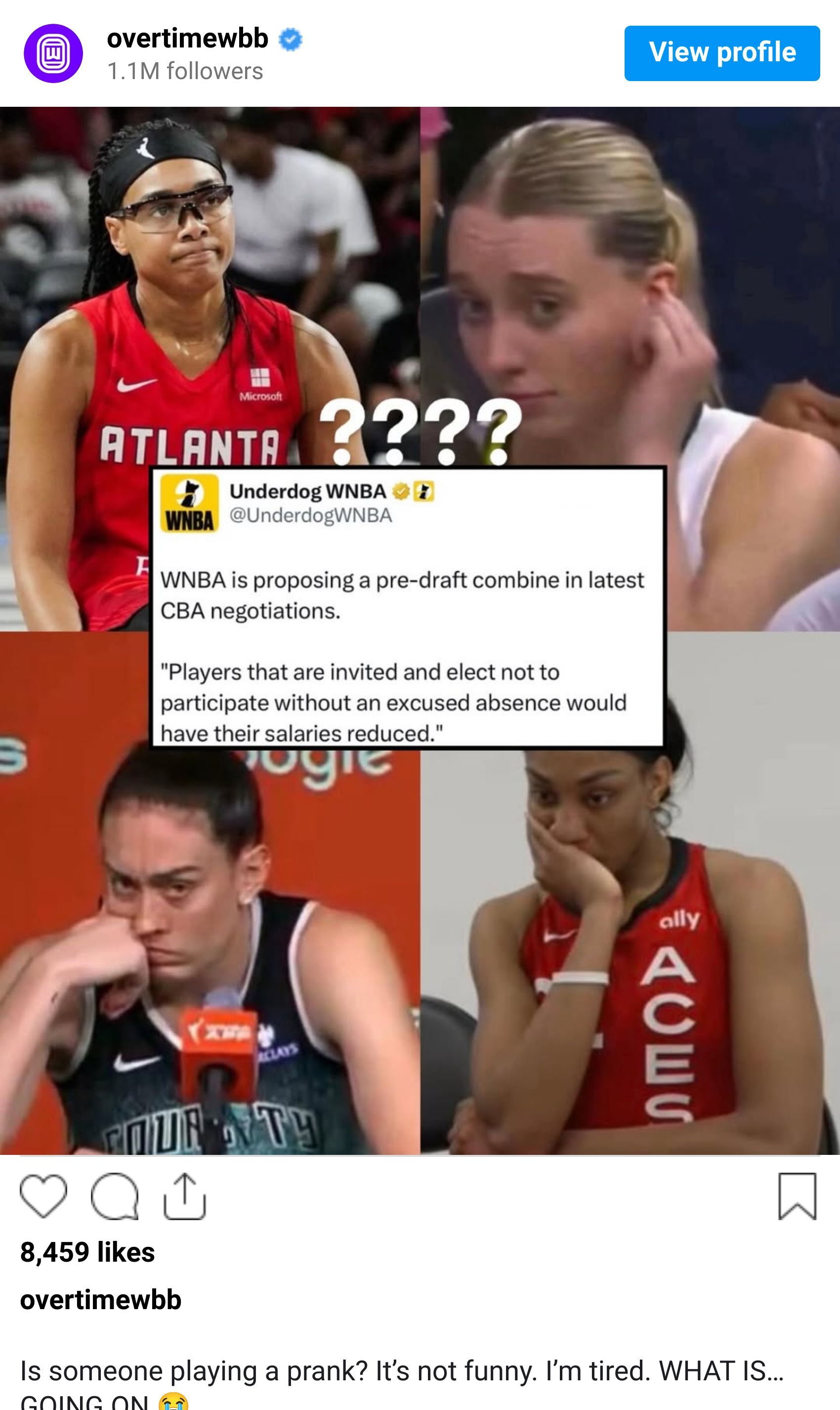
Proposed Change: The WNBA would introduce a pre-draft combine. While details are limited, the league’s proposal includes a rule that would penalize invited players who do not attend by docking half of their rookie salary, unless they have an excused absence.
A draft combine is essentially a situation where all potential invited draftees undergo physical tests and medical evaluations for teams. Sounds very slave like to me idk
Current situation: There is currently no draft combine. Teams scout players by sending personnel to college programs, domestic leagues, and international competitions. There was a WNBA combine in the early 2000s, often held at NCAA Tournament Final Four sites, but it was discontinued. The combines were costly, and teams did not provide adequate medical staff for evaluations, which ultimately made the process untenable.
Implication: This is one of those proposals that is not inherently terrible, but it feels poorly thought out. There is a constant push for the WNBA to mirror the NBA’s structure, yet when it comes to money and fair compensation, the comparison suddenly falls apart.
A more practical alternative would be allowing teams to fly potential draftees out for visits, though that would immediately introduce competitive advantages for teams willing or able to spend more. But again, with all these cheap ass teams, what does it matter? Who Chicago flying out? Don’t nobody want to be on a Spirit flight with the threat of being drafted by Chicago.
Ultimately, this feels like a proposal aimed at the future rather than the present. Right now, it seems unnecessary, especially when considering a key reality the NBA does not face: many draft-eligible women are still actively competing in college basketball and attending school when the draft process takes place. And they HAVE to graduate from school (or turn 22) to be drafted.
Offseason News and Chisme
Check out some of the cool podcasts, videos, reads, and fashion I saw this week.
No more Elle Duncan on ESPN as she leaves for Netflix. Huge hit for Women’s College Basketball and WNBA coverage 😕
@yahoosports Elle Duncan ends her ESPN career with this special moment from Andraya Carter and Chiney Ogwumike ♥️ (via @espnW) #wholesome #elleduncan #... See more
Nastsha Cloud and Isabelle Harrison do a “Tizzy” shoot for Playa Society’s Love & Basketball drop.
@isabelleharrison4 what a moment to share with someone so special to my heart. Love and Basketball couldnt get any better than this. Our first photoshoot tog... See more
Caitlin Clark’s shoe will be dropping in Spring 2026, and Nike just released her first CC Brand commercial, “From Anywhere.”
@caitlin.clark22 From there? 😏 Now show me where you shoot from!! 😮💨🔥#FromAnywhere
The Connecticut Sun is nearing a deal to move the franchise to Houston. The Houston Rockets owner would be buying. The WNBA wants to move the Sun to a city that has already placed a bid for an expansion team. The tribe wants to sell to someone like Boston to make a significant profit on the sale.
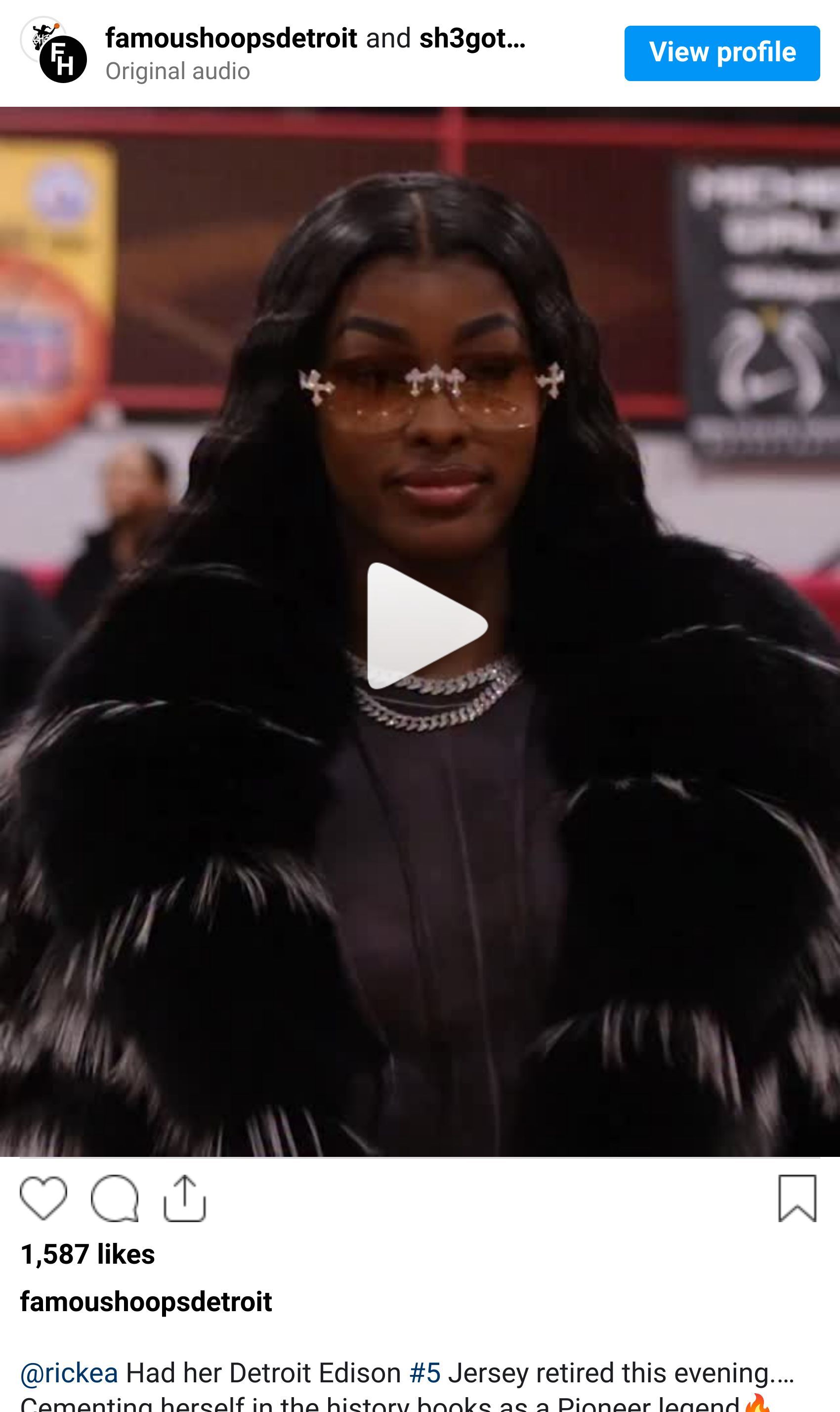
Rickea Jackson got her high school jersey retired in Detroit
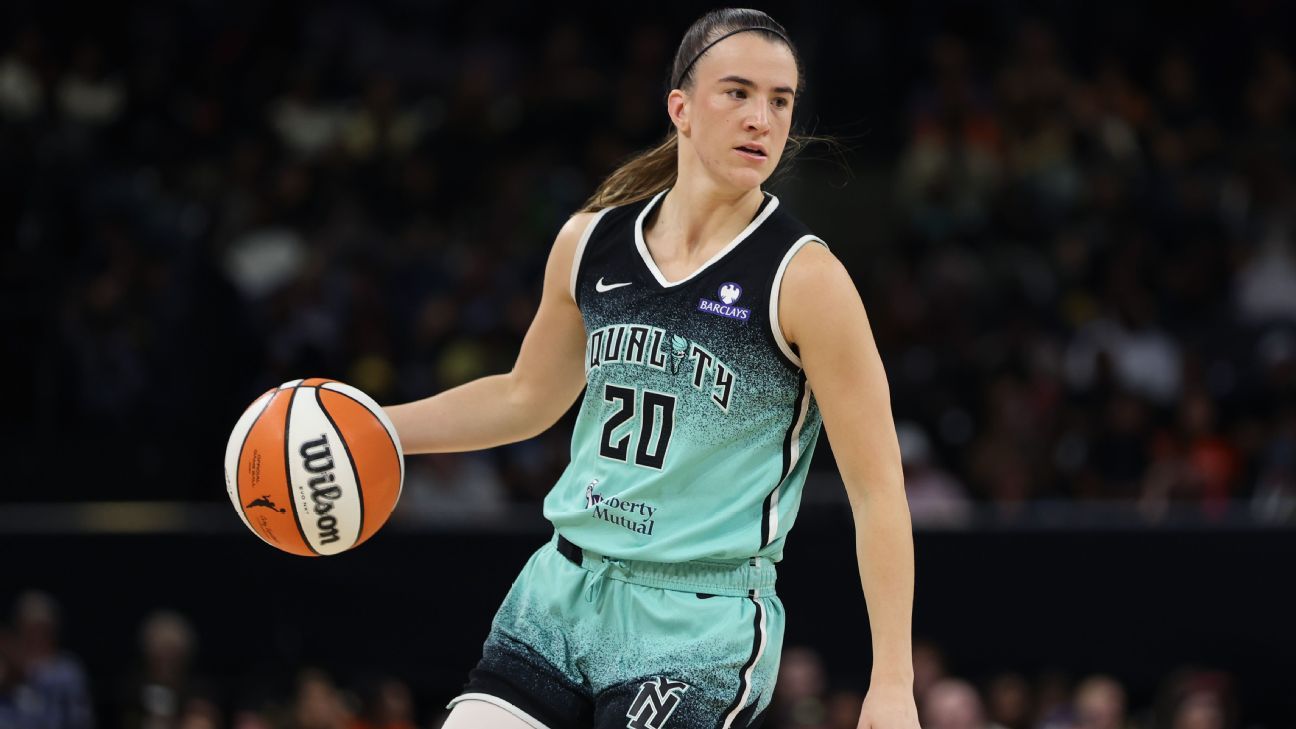
Sabrina Ionescu robbed. She wasn’t home, but this comes at the same time as a Tennessee Titans player and a Knicks player, Josh Hart, were robbed.
USA Basketball Camp in North Carolina!
Unrivaled is Back! ( Unrivaled Newsletter Coming Soon!!)